


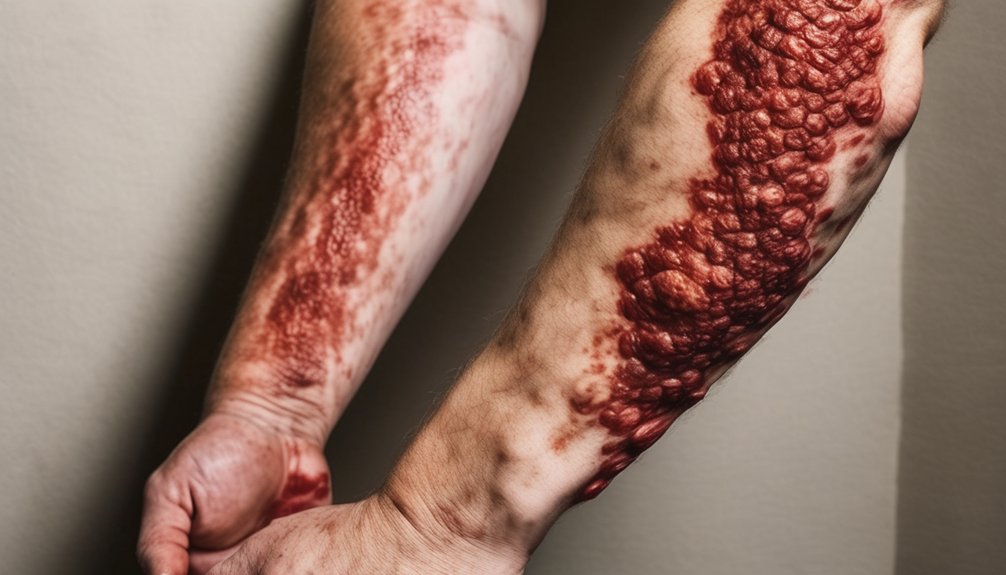
You can develop sudden hives when your immune system reacts to allergens like foods, insect stings, medications, or environmental triggers. Autoimmune conditions, such as lupus or thyroid disorders, also cause hives by triggering ongoing immune responses without obvious external causes. Allergic hives tend to appear quickly with intense itching, while autoimmune hives may last longer with deeper swelling. If hives worsen or come with breathing difficulties, seek medical advice promptly. Exploring both types helps manage and prevent outbreaks effectively.
Common Allergic Causes of Sudden Hives

Although sudden hives can arise from various causes, common allergic reactions often trigger these skin outbreaks.
You may experience hives due to food allergies, such as nuts or shellfish, which prompt your immune system to react defensively. Insect stings also frequently cause sudden hives, releasing venom that irritates your skin.
Environmental triggers like pollen or pet dander can similarly provoke outbreaks. Medication reactions, including antibiotics or pain relievers, might lead to hives as your body responds to foreign substances.
Stress responses and direct skin contact with irritants or allergens can further contribute to sudden hive development. Understanding these triggers helps you manage and avoid outbreaks effectively.
Autoimmune Conditions Linked to Hives
When your immune system mistakenly attacks healthy cells, it can trigger autoimmune conditions that sometimes lead to hives.
Autoimmune diseases like lupus, thyroid disorders, and rheumatoid arthritis are known to cause chronic hives by disrupting normal immune function. In these cases, your body’s immune response becomes overactive, releasing chemicals that cause skin inflammation and itching.
Chronic hives linked to autoimmune diseases often persist longer than allergic reactions and may require specialized treatment. Understanding this connection helps you recognize that sudden hives aren’t always allergy-related but can signal an underlying autoimmune issue needing medical attention.
Identifying and Differentiating Allergic vs. Autoimmune Hives
Because allergic and autoimmune hives result from different immune system triggers, distinguishing between them is essential for proper diagnosis and treatment.
Triggers identification involves recognizing that allergic hives typically appear suddenly after exposure to specific allergens like foods or insect stings. In contrast, autoimmune hives often persist longer and may not link to obvious external triggers.
Symptom differentiation helps you understand that allergic hives usually cause intense itching and quick onset, while autoimmune hives might include deeper skin swelling and longer-lasting lesions.
Knowing these differences guides your approach to managing and addressing sudden hives effectively.
When to Seek Medical Evaluation for Sudden Hives
Recognizing the differences between allergic and autoimmune hives helps you understand how to respond appropriately, but knowing when to seek medical evaluation is equally important.
You should consult a healthcare professional if hives symptoms worsen, persist beyond a few days, or are accompanied by difficulty breathing, swelling of the face or throat, or dizziness.
Additionally, if you have a history of allergies or autoimmune conditions, sharing your medical history can guide proper diagnosis and treatment.
Prompt evaluation guarantees you manage triggers effectively and avoid complications, helping you maintain your freedom and well-being.
Frequently Asked Questions
Can Sudden Hives Be Triggered by Stress or Emotional Factors?
Yes, your stress response can trigger sudden hives. Emotional triggers often activate your immune system, causing skin reactions. Managing stress helps you regain control and freedom from unexpected hives and discomfort.
Are There Natural Remedies to Relieve Sudden Hives Symptoms?
Yes, you can ease sudden hives naturally by sipping herbal teas like chamomile or peppermint and making dietary changes, such as avoiding trigger foods. These simple steps help you regain control and feel freer in your body.
How Long Do Sudden Hives Typically Last Without Treatment?
Sudden hives typically last a few hours to a day, but duration varies depending on symptom severity. You’ll notice how long they stick around changes, giving you some freedom to manage or seek treatment as needed.
Can Certain Medications Cause Sudden Hives as a Side Effect?
Yes, certain medications can cause sudden hives as a side effect. If you have medication allergies, you might experience side effect reactions like hives. Always check with your doctor to keep your freedom and health intact.
Is It Possible for Sudden Hives to Appear Without Any Identifiable Trigger?
Yes, you can experience sudden hives without an identifiable trigger because your immune response might react unexpectedly. These unexplained outbreaks happen even when you feel free from obvious allergens or stressors, keeping your body’s reactions unpredictable.

