


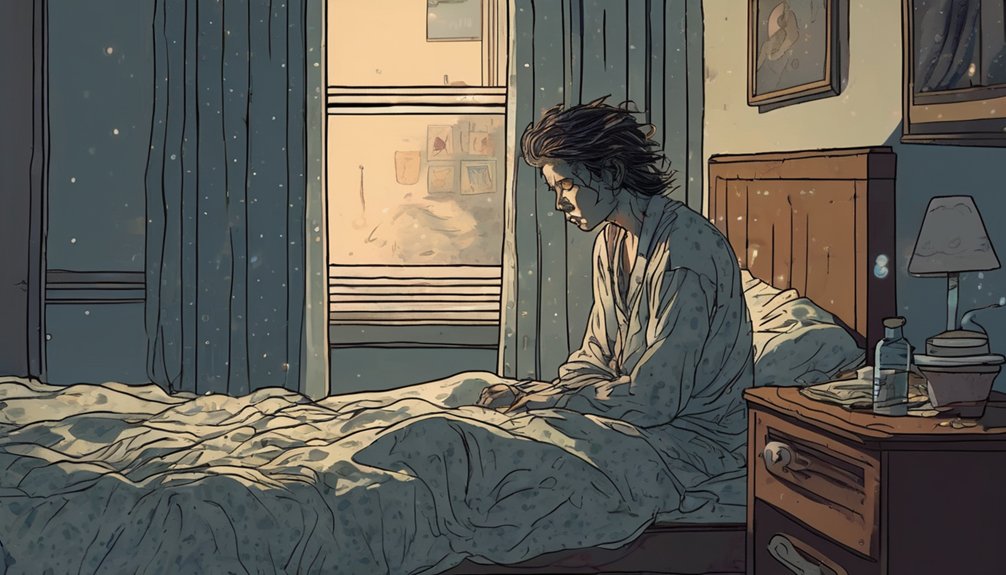
You sweat at night due to various possible causes, including infections like tuberculosis or HIV, which affect your immune system. Hormonal imbalances from menopause or thyroid issues can disrupt temperature control, while certain medications may trigger sweating as a side effect. Chronic conditions such as autoimmune diseases or sleep apnea also interfere with your body’s regulation. Additionally, lifestyle factors like room temperature, stress, and diet play a role. Exploring these aspects offers deeper insight into the reasons behind night sweats.
Common Infections That Cause Night Sweats
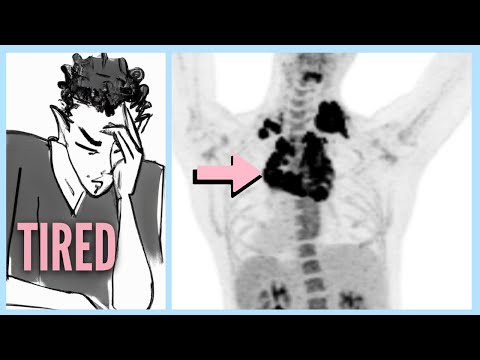
Although night sweats can result from various causes, common infections are a significant factor to take into account.
You should know that tuberculosis symptoms often include persistent night sweating, fever, and weight loss. If you experience these signs, it’s essential to seek medical evaluation promptly.
Additionally, HIV infection is another condition linked with night sweats, as the virus weakens your immune system, making infections more likely.
Recognizing these symptoms early can help you gain control over your health. Staying informed empowers you to identify the cause and pursue appropriate treatment without delay.
Hormonal Imbalances and Night Sweating
Infections are one of several causes behind night sweats, but hormonal imbalances also play a significant role. When your body experiences hormonal fluctuations, especially involving estrogen, progesterone, or thyroid hormones, night sweating can occur.
These shifts often result from endocrine disorders such as hyperthyroidism or menopause. Your endocrine system regulates hormone production, so any disruption may trigger excessive sweating at night.
Recognizing this connection helps you understand the root cause of your discomfort. If you notice persistent night sweats, consider evaluating your hormonal health to address potential endocrine imbalances effectively and regain control over your sleep quality.
Medications and Their Impact on Night Sweats
When you take certain medications, they can directly influence your body’s temperature regulation and cause night sweats.
Medication types like antidepressants, hormone therapies, and some diabetes drugs often list night sweats as side effects. These medications may alter your nervous system or hormonal balance, triggering excessive sweating during sleep.
Understanding which medication types carry this risk helps you and your healthcare provider make informed decisions about your treatment.
If night sweats become disruptive, discussing side effects with your doctor is essential to adjust your medication or explore alternatives that better suit your lifestyle and comfort.
Chronic Conditions Linked to Night Sweating
Certain chronic health conditions can cause night sweating by affecting your body’s temperature regulation or triggering hormonal imbalances.
Autoimmune diseases, like rheumatoid arthritis or lupus, often disrupt normal immune responses, which may lead to excessive sweating during sleep.
Sleep disorders, including obstructive sleep apnea, can also cause night sweats by disturbing your breathing patterns and oxygen levels.
These conditions interfere with your body’s natural balance and can make restful sleep difficult.
If you frequently experience night sweating, it’s important to consult a healthcare professional to identify any underlying chronic issues and develop an appropriate treatment plan.
Lifestyle Factors Contributing to Night Sweats
Although night sweats can result from medical conditions, your daily habits and environment also play an important role.
Your sleep environment, including room temperature and bedding materials, directly affects how much you sweat at night. Warm rooms or heavy blankets can trigger excessive sweating.
Additionally, stress management is essential since high stress levels elevate your body’s cortisol, disrupting normal temperature regulation during sleep.
Poor diet, alcohol consumption, and smoking also contribute to night sweats.
Frequently Asked Questions
Can Night Sweats Be a Sign of Cancer?
Yes, night sweats can be cancer symptoms, but they’re not always a sign of cancer. If you’re experiencing persistent night sweats, you should see a doctor to rule out serious causes and regain your health freedom.
How Do I Differentiate Night Sweats From Hot Flashes?
You can tell night sweats from hot flashes by timing—night sweats drench your sleep, while hot flashes hit quickly, often during the day or night, causing sudden warmth and sweating that fades fast.
Are There Specific Foods That Trigger Night Sweats?
Yes, spicy foods and alcohol consumption can trigger night sweats. If you want to stay cool and free from discomfort, try cutting back on these before bed and see how your body responds.
Can Stress Alone Cause Night Sweats Without Other Symptoms?
Yes, stress alone can cause night sweats. When you manage stress and address anxiety disorders, you can regain control and freedom from these symptoms. Prioritize stress management to improve your nights and overall well-being.
When Should I See a Doctor About Night Sweating?
You should see a doctor about night sweats if they’re frequent, severe, or disrupt your sleep. Don’t wait—schedule a doctor consultation to uncover any underlying issues and regain control over your nights and freedom.

