


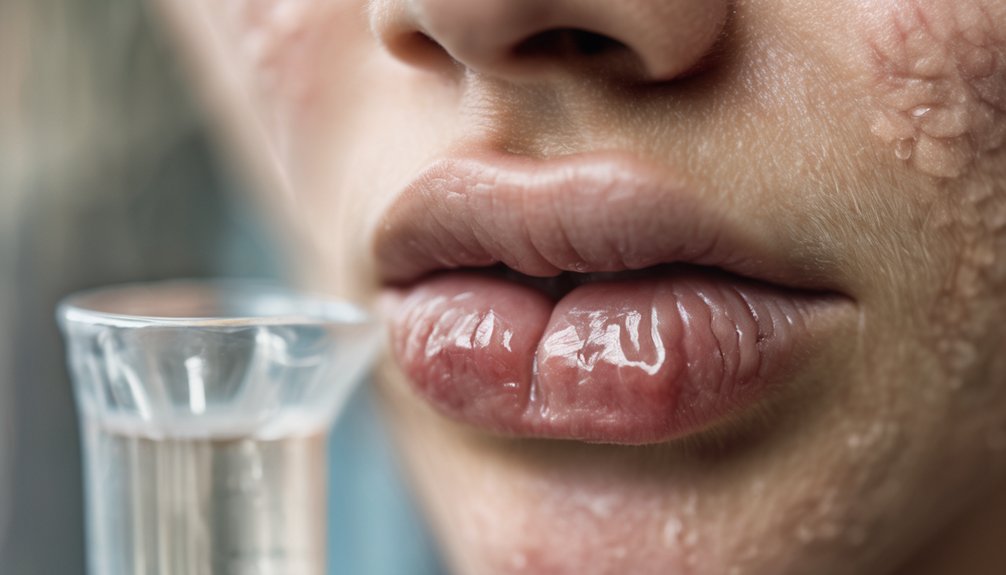
Dry mouth occurs when your saliva production decreases, often caused by medications like antihistamines or antidepressants that reduce saliva flow. Medical conditions such as autoimmune disorders and diabetes can impair saliva glands, leading to dryness. Lifestyle factors, including excessive caffeine, smoking, stress, or high sugar intake, also play a role. Dehydration directly limits saliva generation, making proper hydration essential. Understanding these common causes will help you manage symptoms more effectively and explore further solutions.
Medications That Lead to Dry Mouth

Although dry mouth can result from various causes, medications are among the most common contributors.
When you take drugs with antidepressant effects, they often reduce saliva production, leading to that uncomfortable dryness.
Similarly, the antihistamine impact on your body can dry out your mouth by blocking certain receptors involved in saliva secretion.
These medications interfere with the natural balance your body maintains for moisture, limiting your mouth’s ability to stay hydrated.
Understanding these effects helps you recognize why dry mouth occurs as a side effect and encourages you to discuss alternatives or remedies with your healthcare provider.
Medical Conditions Associated With Xerostomia
Medications are a frequent cause of dry mouth, but certain medical conditions can also considerably reduce saliva production.
Autoimmune disorders, such as Sjögren’s syndrome, directly attack the glands responsible for saliva, leading to persistent dryness.
Endocrine issues, including diabetes and thyroid problems, disrupt normal body functions and can impair saliva flow.
If you experience chronic dry mouth, understanding these underlying medical factors is essential.
Addressing the root causes often requires medical evaluation and targeted treatment.
Recognizing how these conditions influence saliva production helps you take informed steps toward managing xerostomia effectively and maintaining your oral health.
Lifestyle Factors Affecting Saliva Production
When you make certain choices in your daily routine, you can greatly affect how much saliva your body produces. Your dietary habits play a significant role; consuming excessive caffeine or sugary foods may reduce saliva flow.
Additionally, elevated stress levels can trigger the body’s fight-or-flight response, which often suppresses saliva production. Managing stress through relaxation techniques can help maintain a healthier saliva balance.
Avoiding smoking and limiting alcohol intake also supports normal saliva function. By understanding these lifestyle factors, you can make informed decisions that promote ideal saliva production and reduce the discomfort associated with dry mouth.
The Role of Dehydration in Dry Mouth
Since your body relies heavily on water to produce saliva, dehydration directly reduces the amount of saliva generated in your mouth.
When your fluid intake drops, your saliva glands receive less moisture, leading to dry mouth symptoms. Maintaining proper hydration is essential, so following hydration tips like drinking water regularly and avoiding excessive caffeine or alcohol can help sustain saliva flow.
Dehydration not only causes discomfort but also increases the risk of oral infections and tooth decay.
Frequently Asked Questions
Can Anxiety Cause Dry Mouth Symptoms?
Yes, anxiety triggers your body’s stress response, which can reduce saliva production and cause dry mouth. You’ll find managing stress and anxiety helps free you from this uncomfortable symptom and keeps your mouth feeling moist and comfortable.
Does Aging Naturally Reduce Saliva Production?
Yes, aging effects often reduce saliva production naturally, but you don’t have to accept it as fixed. You can explore hydration, diet, and lifestyle changes to maintain your mouth’s moisture and enjoy freedom from discomfort.
How Does Smoking Contribute to Dry Mouth?
Smoking effects include reduced saliva flow because nicotine impacts your salivary glands, making them produce less moisture. You won’t feel as free with a dry mouth, so quitting can help restore your natural comfort and hydration.
Can Mouth Breathing Lead to Persistent Dry Mouth?
Yes, mouth breathing can lead to persistent dry mouth because it reduces saliva production. When you breathe through your mouth, your saliva evaporates faster, leaving your mouth dry and uncomfortable, limiting your freedom to enjoy speaking or eating.
Are There Any Dental Appliances That Cause Dry Mouth?
Yes, some dental appliances like dentures or braces can reduce saliva production, causing dry mouth. You’ll want to keep hydrated and discuss options with your dentist to maintain comfort and keep your mouth feeling fresh and free.

